Friday, April 16, 2010

Review Index


Dan Abnett - The Founding
Dan Abnett - Ravenor: The Omnibus

Daniel Abraham - Leviathan Wept
Daniel Abraham - The Dragon's Path
Daniel Abraham - The King's Blood

Robert Aickman - Cold Hand in Mine

Alma Alexander: 2012: Midnight at Spanish Gardens

Leonid Andreyev - Visions

Angel: Season One

Assassin's Creed 2

Iain M. Banks - Consider Phlebas
Iain M. Banks - Player of Games
Iain M. Banks - Against a Dark Background
Iain M. Banks - Matter
Iain M. Banks - Surface Detail

Batman: Arkham Asylum [Game Review]

Battlestar Galactica: Season One

Robert Jackson Bennett - The Company Man

Algernon Blackwood - Ancient Sorceries and Other Weird Stories

Poppy Z. Brite - Drawing Blood
Poppy Z. Brite - The Lazarus Heart
Poppy Z. Brite - Liquor
Poppy Z. Brite & Caitlin R. Kiernan - Wrong Things

Buffy the Vampire Slayer: Season One
Buffy the Vampire Slayer: Season Two
Buffy the Vampire Slayer: Season Three
Buffy the Vampire Slayer: Season Four
Buffy the Vampire Slayer: Season Five
Buffy the Vampire Slayer: Season Six
Buffy the Vampire Slayer: Season Seven

The Cabin in the Woods

Ramsey Campbell - The Face that Must Die

Raymond Chandler - The Long Goodbye

Justin Cronin - The Passage

Philip K. Dick - Do Androids Dream of Electric Sheep?

Doctor Who: Series Five

Stephen R. Donaldson - The Real Story

Arthur Conan Doyle - A Study in Scarlet
Arthur Conan Doyle - The Adventures of Sherlock Holmes

E.R. Eddison - The Worm Ouroboros

Steven Erikson - Bauchelain and Korbal Broach

Ian C. Esslemont - Night of Knives
Ian C. Esslemont - Return of the Crimson Guard
Ian C. Esslemont - Stonewielder

Brian Evenson - Last Days

Fantasy & Science Fiction: March/April 2011
Fantasy & Science Fiction: May/June 2011
Fantasy & Science Fiction: July/August 2011

Firefly

Neil Gaiman - Neverwhere
Neil Gaiman - American Gods
Neil Gaiman - Anansi Boys
Neil Gaiman - Fragile Things

Felix Gilman - Thunderer
Felix Gilman - Gears of the City
Felix Gilman - The Halfmade World

David Goodis - The Wounded and the Slain
David Goodis - Five Noir Novels of the 1940s & 50s

H.A. Goodman - Breaking the Devil's Heart

Kate Griffin - A Madness of Angels
Kate Griffin - The Midnight Mayor
Kate Griffin - The Neon Court

B.B. Griffith - Blue Fall

Eirik Gumeny - Exponential Apocalypse

Allan Guthrie - Hard Man

Peter F. Hamilton - Night's Dawn
Peter F. Hamilton - Fallen Dragon
Peter F. Hamilton - Pandora's Star and Judas Unchained

Dashiell Hammett - Red Harvest
Dashiell Hammett - The Continental Op

James Herbert - Sepulchre

Jack Hight - Siege

Joe Hill - 20th Century Ghosts
Joe Hill - Heart-Shaped Box

Christopher Hitchens - God is Not Great

Robin Hobb - Farseer
Robin Hobb - Liveship Traders

William Hope Hodgson - The House on the Borderlands
William Hope Hodgson - Carnacki the Ghost-Finder

Kameron Hurley - God's War

I Am Number Four [Movie Review]

Inception [Movie Review]

Iron Man 2 [Movie Review]

N.K. Jesmin - The Hundred Thousand Kingdoms

Poppy Z. Brite & Caitlin R. Kiernan - Wrong Things
Caitlin R. Kiernan - The Ammonite Violin & Others
Caitlin R. Kiernan - The Drowning Girl
Caitlin R. Kiernan - Confessions of a Five-Chambered Heart

Stephen King - Carrie
Stephen King - 'Salem's Lot
Stephen King - Cujo
Stephen King - Skeleton Crew
Stephen King - The Girl Who Loved Tom Gordon
Stephen King - Duma Key
Stephen King - Everything's Eventual

Daniel Kraus - Rotters

Mark Lawrence - Prince of Thorns

Thomas Ligotti - Songs of a Dead Dreamer
---Thomas Ligotti - The Nyctalops Trilogy
---Thomas Ligotti - "Dr. Voke and Mr. Veech"
Thomas Ligotti - Noctuary
Thomas Ligotti - My Work is Not Yet Done
Thomas Ligotti - Teatro Grottesco
Thomas Ligotti - The Conspiracy against the Human Race

Jeff Long - The Descent

H.P. Lovecraft - "The Nameless City"
H.P. Lovecraft - The Case of Charles Dexter Ward

Little Fockers [Movie Review]

Marjorie M. Liu - The Iron Hunt

Jeph Loeb - Batman: Hush

George R.R. Martin - Sandkings
George R.R. Martin - Fevre Dream
George R.R. Martin - Nightflyers
---George R.R. Martin - "Nightflyers"
George R.R. Martin - Tuf Voyaging

Robert McCammon - The Wolf's Hour and The Hunter from the Woods

Cormac McCarthy - No Country for Old Men

Graham McNeil - The Ultramarines Omnibus

Micmacs [Movie Review]

China Miéville - The City and The City
China Miéville - Embassytown

Frank Miller - Batman: Year One

Sandy Mitchell - Hero of the Imperium

Elizabeth Moon - Sheepfarmer's Daughter

Alan Moore - Batman: The Killing Joke
Alan Moore - V for Vendetta

Richard K. Morgan - Market Forces

Haruki Murakami - Hard-Boiled Wonderland and the End of the World
Haruki Murakami - The Wind-Up Bird Chronicle
Haruki Murakami - After Dark
Haruki Murakami - 1Q84

Adam LG Nevill - Banquet for the Damned
Adam LG Nevill - Apartment 16
Adam Nevill - The Ritual

Mark Charan Newton - Nights of Villjamur
Mark Charan Newton - City of Ruin

Larry Niven - Ringworld

Yoko Ogawa - Revenge

Félix J. Palma - The Map of Time
Félix J. Palma - The Map of the Sky

K.J. Parker - Scavenger
K.J. Parker - Engineer
K.J. Parker - The Folding Knife
K.J. Parker - The Hammer
K.J. Parker - Sharps

Cameron Pierce - Cthulhu Comes to the Vampire Kingdom

Terry Pratchett - Going Postal

Cherie Priest - Boneshaker

Alastair Reynolds - Thousandth Night/Minla's Flowers
Alastair Reynolds - Terminal World
Alastair Reynolds - Deep Navigation

Patrick Rothfuss - The Wise Man's Fear

Jeff Salyards - Scourge of the Betrayer

Brandon Sanderson - "Defending Elysium"
Brandon Sanderson - The Way of Kings
Brandon Sanderson - The Alloy of Law

Serenity

Sylvia Shults - Price of Admission

Joan Slonczewski - A Door into Ocean

Scott Smith - The Ruins

Mary Shelley - Frankenstein

Shock Totem #1
Shock Totem #2

Dan Simmons - Fall of Hyperion

Peter Straub - If You Could See Me Now

Charles Stross - Glasshouse

Steph Swainston - The Year of Our War

Larry D. Sweazy - The Rattlesnake Season

Sam Sykes - Tome of the Undergates
Sam Sykes - Black Halo

Thomas Tessier - Wicked Things

Roland Topor - The Tenant

Catherynne M. Valente - Ventriloquism

Jeff VanderMeer - Veniss Underground

Vernor Vinge - A Fire Upon the Deep
Vernor Vinge - A Deepness in the Sky
Vernor Vinge - The Children of the Sky

David Foster Wallace - Infinite Jest
David Foster Wallace - The Broom of the System

Jeffrey Wilson - The Donors

Tuesday, April 13, 2010

Alastair Reynolds - Terminal World

And in that time, before the gates of paradise were closed to them, men and women were as children. And so plentiful were the fruits and bounties of paradise that they lived for four-score years, and some lived longer than that. And in that time the Earth was warm and blue and green and many were its provinces.

Alastair Reynolds’s latest novel is the easy equal of anything the man’s yet written. Terminal World contains many elements familiar to Reynolds readers; in many ways, Terminal World is the culmination of several trends that have popped up in almost everything that Reynolds has written. Despite those, Terminal World is an outlier in the Reynolds catalog, and if you need proof, let's just look at the covers. Spaceship, spaceship, spaceship, spaceship, spaceship... dirigible?

One of the main differences is Terminal World’s extremely focused narrative. Revelation Space didn’t have an astronomically large number of point of views, but they were scattered over awe inspiring distances in both space and time. Chasm City, as well as many of Reynolds’s other work (Absolution Gap, for instance), features two plot threads that don’t come together until the very end of the novel. Since then, however, Reynolds has been making a conscious effort to streamline his stories. In Terminal World, we see the world only through the eyes of Doctor Quillon and a few one off characters. The change is marked. As opposed to something like Redemption Ark, where Clavain and the other main characters were the ones guiding the story, we see events from the periphery a good amount of the time. That’s not to say that Quillon isn’t important, of course, but he’s only one player amongst many. This close focus adds tension to several parts, but can also occasionally lead to a plot without a clear goal.

As a result of Quillon’s dominance, Terminal World is a very personal novel. To that end, it’s a definite plus that the characterization is generally excellent. At times, Reynolds’s characters seem in danger of falling into standard archetypes, but the traditional climaxes, expected from page one, are absent and the illusion always gives way to something deeper. A good example is Meroka. She has good reason to despise Angels; Quillon is an angel of sorts. I don’t think that anyone will be shocked by knowing that she finds out what he is, and that she hates him for it. In that phase of their relationship, she gives Quillon the following speech:

And you’re wrong about me, if you think there’s forgiveness deep down inside, if only you can find it. Truth to tell Cutter, there’s only more hate. That’s what I am. Clinical-grade hate, all the way through. Keep digging, you’ll only come out on the other side.

Amusingly written, but not particularly surprising. Surely, they are going to have a tearful reunion at some point, right? Well…no. Reynolds characters often tread familiar paths, but they do so without the usual road signs. Melodramatic declarations and epiphanies often allow authors to point out the change in characters without having to make the characters actually change. In Terminal World, the characters never go through one hundred and eighty degree reinventions. Instead, their personalities and friendships evolve subtly and naturally.

Thematically, Terminal World deals with many of the same issues that Reynolds has always dealt with, namely man’s struggle to adapt and survive in a vast and uncaring world. In this case, the endless emptiness of space is replaced with the Zones, different areas that each dictate a different level of technology, or, in extreme cases, prohibit all life.

Reynolds’s prose and worldbuilding here is primarily set to evoke wonder and awe. Moments like the first vision of the Swarm were powerful enough to make me put down the book for a few seconds and just revel in the image. The majority of the book is built like that, with the effect of making the contrasting scenes all the starker. Fleeing in a train that feels like it’s going backwards in time, the delicious strangeness of the scene is stabbed through by the appearance of hellish hunter angels. The variety between the feel of scenes set in Neon Heights and Horsetown, let alone the hellish wastes, is nothing short of amazing.

One of the main feelings you get from reading Terminal World is that of a world with tremendous depth. Everything that we’re shown feels like a part of something much larger, and it’s something that the very limited point of view only emphasizes. As opposed to some settings that feel like a city prop for a play, vibrant when in use and husks of wood when not mid performance, this is a world that feels like it exists round the clock. I can picture people living their lives in Horsetown, and I can picture running in fear from Skullboys even when the camera’s far in the air in another part of the world. I’m praying for a sequel to this world at some point, though I’m unsure just how likely it actually is.

Terminal World’s ending is one of its few weak points. With a few notable exceptions, Reynolds’s endings have always been hit and miss. Now, it seems to me that you can have two kinds of ambiguous endings. You can have the kind where a character’s personal goals are accomplished, but the grander struggle goes on, or, to inverse that, one where the character’s life is still in flux, but the greater battle is done. Both can, and obviously have, been done to great effect. Unfortunately, Terminal World’s ending is ambiguous in both ways, leaving the reader with the feeling that the movie cut out in the final five minutes.

Still, complaining too much about a slightly disappointing ending after reading such a marvelous book feels petty, and the ending does not, after all, come anywhere near damaging the rest of the book. Terminal World is one of Reynolds’s finest works yet. It has everything that has made him such an excellent writer over the years, as well as a whole host of new things, almost all of which succeed brilliantly. If you are even remotely interested in Reynolds (or just good science fiction), you owe it to yourself to read this.

Friday, April 9, 2010

Rebooting the Classics

Recently, John Scalzi announced that he has written a “rebooted” version of H. Beam Piper’s Little Fuzzy. Now, I have a decent amount of faith in Scalzi. I’ve only read Old Man’s War by him, but it was quite good, and I’ve read a slightly ridiculous amount of Whatever over the past few weeks. I don’t think that Scalzi is going to start producing hackwork any time soon, but Scalzi isn’t the whole field, and, as Pride and Prejudice and Zombies proved, unique ideas stay unique for roughly as long as it takes for the first reader to pick up a copy. Anyone who can’t see the potential for ludicrous amounts of derivate dross in these reworkings is mind bogglingly optimistic, but what actual impact is this likely to have on the genre?

Let’s stick with the Spliced fiction (ala Pride and Prejudice and Zombies) for a bit, as it’s quite similar to this new (potential) phenomenon. Neth recently posted some musings on his blog, and I think he raises most of the important points. It’s a fun concept, sure, but is it actually worthwhile? I can’t give you a definitive answer, and I’d be lying if I said I was well read in the new fad. I do, however, think that it’s something that could have potential…but, in order to reach that potential, they’ll need to do more than just mash two things together. As it is, for the most part, Spliced fiction is taking an old idea, leaving it entirely unchanged, and then sticking on some flashy disco lights to obscure the fact that you haven’t done shit in the way of actual innovation. Entertaining, sure, but not exactly groundbreaking. If any of these new authors want lasting success, they’re going to have to create something more than a comic idea. It’s the same as with Science Fiction. You can’t just say “my book has a spaceship,” and expect it to sell. You have to do something with the spaceship, and so far I remain unconvinced that anyone’s actually done anything with the spaceship in all these Spliced stories.

I have a bit more faith in the merit of near future Rebooted fiction. This type of thing is relatively unheard of in fiction, but is commonplace just about everywhere else. One of the most obvious comparisons is the tribute song. The vast majority of tribute songs are simply a note for note reproduction of the original, generating the same feelings if well done, but not adding anything. The players of these songs, however, aren’t trying to add anything with their covers. It is, in general, more to show an artistic debt than anything else. This kind of cover is analogous to the fan fiction that’s always existed. Entertaining, and a good building block for other things, but not noteworthy – nor likely to ever really impact the field –on its own.

The second kind of tribute, however, is a totally different ballpark. This is the kind of cover in which the covering band doesn’t just replay the song, but reinvents it. Excellent examples of this include Jimi Hendrix’s cover of Bob Dylan’s All Along the Watchtower and Judas Priest’s cover of Joan Baez’s Diamonds and Rust. These covers are not so much a regurgitation of the original idea but a reenvisioning of it through a new perspective. If this concept was extended to fiction, as Scalzi seems to intend, I see no problem with it at all.

So, why have neither of those styles of tributes ever caught on with fiction? Well, alright, there have been a few examples, but all of them have been on the fringe of Scalzi’s Rebooting and nothing closer. The most obvious of those, at least to me, is the continuation of the works of Robert E. Howard and HP Lovecraft after the authors’ death. The difference there is that those stories are extensions of the authors’ work, not revisions of it [see comments for an expansion on this by Taraniach]. Moving away from exceptions, the reason that these revisions have never done much in fiction is that their main cause is gone. In video games and movies, fields where this kind of thing is common, the primary reason is technology. You may debate the degree, but it’s impossible to say that graphics and the like do not impact the experience at all. Newer gamers, say the people who started on an Xbox, are going to have a damn hard time going back and playing older games, regardless of their quality. As a result, revisionists get their chance to shine every few years as they raid the graves of past giants for a new audience.

In books, however, there’s nothing like technology to necessitate revision. Yes, language changes, but not to the degree that you’re going to need to translate The Hobbit anytime soon. What does this mean? Well, barring a few oddballs, I’m hoping that the majority of these Reboots will be done out of a love for the original work, and a belief that it can be altered in some way, rather than because seventeen, or two hundred and six, years have passed.

Overall, the reason that I’m confident the market won’t be flooded with revisions is, in part, what I just mentioned. I don’t think it’s going to be all that much of a cash cow, because there’s very little reason for a reader to pick up a newly written copy of A Red Badge of Courage over the original. People have proven that they have absolutely no problem paying again and again for something that’s just like Tolkien, but I have a hard time believing that they’ll pay the same amount for something that is Tolkien. Or perhaps I’m just being a bit of an optimist here.

Tuesday, April 6, 2010

Philip K. Dick - Do Androids Dream of Electric Sheep?

On his way to work Rick Deckard, as Lord knew how many other people, stopped briefly to skulk about one of San Francisco’s larger pet shops, along animal row.

Do Androids Dream of Electric Sheep? is a Science Fiction classic, the inspiration for Blade Runner, and sports one of the best written blurbs I’ve ever read. The good ideas don’t stop on the back cover. The book tackles several interesting themes and presents a whole host of unique, and well integrated, ideas. Despite all this, Do Androids… fails to live up to its reputation.

The book’s cornerstones are the androids and the concept of empathy. As more and more realistic androids are built, it becomes almost impossible to distinguish them from humans. On almost all levels, intellectual, emotional, etc, they conform perfectly to the norm. The humans still on earth are terrified by this. What if, one day, there is an android so advanced that no test, no matter how intricate, can separate them from people? How will they be hunted down, kept separate and subjugated? More importantly – for the reader, if not for the police organizations of future earth – how can we justify hunting down and killing something that is the same as us save for its manner of birth?

Ironically for a book so focused on empathy, where Do Androids… falls short is the prose’s ability to convey emotion. Put simply, the text conveys none at all; everything is conveyed in the same listless monotone. Let’s imagine a standard metal song, beginning with an acoustic intro. After a minute or two of the introduction, the electric guitar comes in and the feel of the song completely changes. We go from atmospheric and quiet to loud and aggressive. Do Androids… is the equivalent of the entire song played by the acoustic. Yes, the notes are the same, but the feeling’s totally changed; it’s no longer dynamic in the slightest.

This fundamental lack of vibrancy, of change, in the text hampers it in many ways. Fight scenes and climaxes are both stripped of their power:

“Why won’t my laser tube fire?” [The Android] said, switching on and off the miniaturized triggering and aiming device which he held in the palm of his hand.

“A sine wave,” Rick said. “That phases out laser emanation and spreads the beam into ordinary light.”

“Then I’ll have to break your pencil neck.” The android dropped the device and, with a snarl, grabbed with both hands for Rick’s throat.

As the android’s hands sank into his throat, Rick fired his regulation issue old-style pistol from its shoulder holster; the .38 magnum slug struck the android in the head and its brain box burst. The Nexus-6 unit which operated it blew into pieces, a raging, mad wind which carried throughout the car. Bits of it, like the radioactive dust itself, whirled down on Rick. The retired remains of the android rocked back, collided with the car door, bounced off, and struck heavily against him; he found himself struggling to shove the twitching remnants of the android away.


The above is supposed to be a thrilling moment, a betrayal, an abrupt ambush-like action scene, and yet the explanatory dialogue dulls the effect entirely. Deckard’s reaction to having a gun pointed at him is to explain the precise mechanics preventing his skull from decorating the car door. In addition, the entire affair is over before it can begin. When, after the lackluster opening ripostes are exchanged, the fight begins in earnest, there’s barely a paragraph of the android’s execution; there isn’t time for even the most involved of readers to detect even the faintest whiff of danger before said danger’s dispatched, a process matched only in speed by the writing’s desire to meander about explaining the cranial anatomy of androids. In this manner, almost all of the book’s climaxes are disposed of, after pages of buildup, as a vague flash in the rear view mirror and with the faintest feeling of that’s it?

Worse, the reader is prevented from ever identifying with Deckard at all, not just when he’s in mortal danger. Deckard’s relationships never draw us in, we never get to develop our own feelings for any of the character’s, and we don’t truly get to share Deckard’s, leaving us with just the shallow knowledge of his physical and verbal response to those around him. As a result, the conflicts of interests, and what should have been the validation of all the novel’s themes, falls almost wholly flat.

Furthermore, moving past the prose, there’re instances where things seem to be done in order to augment a certain theme, or just for convenience, when it’s hard to think of a rational reason for them to be done that way. For instance, there are several companies that make androids. Everyone who goes to Mars – and everyone who isn’t dirt poor goes – gets a free android. So, if the demand is on Mars (it is, in fact, illegal to be an android running around on earth), and the companies are rich enough to go (they’re described as, essentially, swimming in money), why the hell are they still on earth? In addition, partway through the novel, Deckard stumbles onto a nest of androids. In the middle of the nest is a single human. The man’s existence eventually leads to a thematic coup de grace, but I’m unable to think of a single reason for him to be there at all.

Amazingly enough, almost none of these flaws exist when the point of view switches over to John Isidore, a mentally crippled “Chickenhead.” Contrary to in Deckard’s sections (where any semblance of emotion is subtle-ized itself right out of existence), Isidore’s moods are painted in broad brushes. The effect can occasionally be comic, but amidst the overacting the character gained my sympathy in a way that no one else in the book came even close to matching. I guess I’m a bigger fan of melodrama than I am of blank stares.

Perhaps a part of my liking for Isidore comes from his job as an ambulance driver for an electric animal company. The obsession with animals was by far my favorite aspect of Dick’s work; it showcases the changes to earth perfectly. The most interesting portion of the entire novel comes from a discussion of the merits of real and mechanical cats.

Approaching the question raised between humans and androids in a totally different way, Dick makes us look a bit closer at our own empathy. The majority of the technology is of a similar vein, seamlessly integrated and fascinating. Perhaps chief among them is the Penfield Mood Organ, a device that dictates your mood upon the dials you push. All of these devices are treated so irreverently by the characters that it often takes several seconds to realize that we don’t (yet) have real world equivalents, and all of them are thematically charged to an impressive degree.

Philip K. Dick’s Do Androids Dream of Electric Sheep? is a novel that I failed to connect with on any meaningful level. That being said, it’s not a novel that I could advise someone to not read. The book has enough interesting ideas that I can easily see why it’s considered such a classic…it’s just a pity that those ideas are so let down by the prose.

Friday, April 2, 2010

The Prince of Nothing [Cover Art]

Everyone says not to judge a book by its cover, but I'm not sure how you're supposed to avoid doing that. I can think of quite a few books for which cover art made a large part of the experience for me, and I'm not just talking about ultra-deluxe Subterranean editions. One example of absolutely excellent cover art is, for me, the original Prince of Nothing covers, especially The Darkness That Comes Before:


I love the combination of history (the buildings on the bottom), character (notice the lack of a hood), and, most of all, an incredibly exotic feel. Now, I can't really rationalize most of those, but the cover art was a big part of why I first picked up The Darkness That Comes Before. All artwork obviously doesn't have to do that much for me, but I prefer it when it doesn't do the opposite. Unfortunately, that seems to be precisely Bakker's new (Croatian) angle. Stealing ever so gracefully from the Blog of the Fallen, I present to you what is quite possibly the worst set of covers that I've ever seen:


Or, perhaps even worse, this:


I especially like how Esmi is evidently so bored by the fight that she's busy falling asleep. Or how, in the first one, the barbarians are being battered back by the dust cloud caused by the dragon Kelhus is flying on. Well, okay, he's not actually flying on the dragon, but I'll be damned if it doesn't look like he is. Oh, and I like his glowing eyes and nose.

I don't think I can imagine two images that less convey the feeling of the text inside. Prince of Nothing is somber, dark and complex. This is none of those. I've got to say, I don't think I would've been all that motivated towards a purchase based on those.

Thursday, April 1, 2010

Up and Coming (and Essential?) in April

I'm not presenting an objective list. What would the point of that be, when someone else is doing just that, but a dozen times better than I could? This is, instead, just a personal list of books that I'm interested in and the reasons that I am. Perhaps our tastes will line up and you'll find something, or perhaps not. Let's find out, shall we?


I’m generally hesitant about doing something like promoting book two of a series I haven’t read, but I think I may have to make an exception here. I’ve heard quite a few good things about The Painted(/Warded)Man, though not all positive, but Aidan’s review convinced me to give his books a shot. The excellent cover art for The Desert Spear might’ve just given me the push I needed to do just that…though Aidan seems a bit less thrilled with this second volume, here.


If there is a poster child for internet promotion, it’s Sam Sykes, as far as I’m concerned. I wasn’t wowed by the concept, and Wert’s lukewarm review countered the Abercrombie comparisons and left me mildly interested but unlikely to purchase. Then I read Syke’s interview on A Dribble of Ink. Sykes has the kind of online personality that it’s hard to not get taken in with at least a little bit; he’s so over the top you just can’t help but laugh with him. And then I read Syke’s thoughts on reviewing in general over at the Speculative Scotsman, and I was sold. Can you really tell me that that combination of comedy and insight isn’t something you want to investigate further?


I was first introduced to Kay through Ysabel, and I was more than a little mixed. The prose was excellent and the atmosphere and glimpses of past cultures superb, but the modern world’s intrusions became more infuriating each time they occurred. Thankfully, I’ve been told again and again that Ysabel’s a bit of an outlier in Kay’s catalogue, and Under Heaven looks like the perfect book to give him another chance. If you have any doubts in your mind about this one, I’ll refer you to SF Review’s glowing review. Or, if you need still more convincing, what about Pat’s equally awed take?

Wednesday, March 31, 2010

Reading in March

Even doing a review a week, there's no way I can get through all the books I want to get through. There is, of course, no obvious NEED to review everything I've read, but I feel like I should at least mention most of it. I'm not doing this (purely) in a masturbatory, look-what-I've-read fashion, but hopefully also giving you a rough idea about the books I don't have time to talk about in a more developed fashion. I'll also link any reviews I've done for the books, as well as any outside reviews that I found particularly worth reading. So, without further ado, what I read in March:


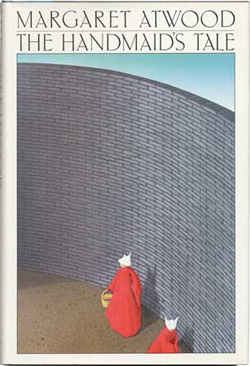
The Handmaid’s Tale is a disturbing, intriguing novel. It’s very much a novel of excellent prose and slight shifts rather than big explosions, and you need to be digging into every word as you read, but the experience is well worth it. My only qualm is the needlessly ambiguous ending, especially since any actual doubts are resolved in the epilogue.


The first Black Company novel in the omnibus was interesting due to the writing’s simplicity and the world’s refreshing amorality, but I wasn’t totally sold on the series. I can’t say that I’m a total convert yet, but Shadows Linger went a long way toward winning me over. My main gripe with the first volume, the highly episodic nature of the plotting, is absent here, and the character of Shed gives the story some variety. I have no idea how Cook’s going to bring this to a close in just two hundred or so pages, but I guess I’ll find out when I read White Rose next month. Look for a review then.


I’ve heard again and again that Malazan gets worse as it goes along, and I know two or three people who dropped the series at Reaper’s Gale, and yet it’s having the opposite effect on me. I didn’t fall in love until House of Chains, and each successive volume seems to just drag me deeper. This volume wasn’t perfect, of course (none of the Malazan books are even close to that), but like with all the other volumes, there are enough jaw dropping positives to overpower the occasional cringe worthy negative. I’m going to try and wrap up the Malazan series in a grand series of reviews once I get caught up.


Mad Ship is even better than Ship of Magic, and Ship of Magic in turn was even better than Farseer. At this rate, Liveships is going to quite possibly become my favorite trilogy. The characterization is just as good here, the world is broad and interesting, and the plot will occasionally surprise the hell out of you…though it probably wouldn’t have helped if the back cover didn’t reveal the first few hundred pages of the book quite so glibly. Look for my review once I finish the trilogy.


I’ve said it before (to myself, if that counts) that Stephen King is the best modern horror author there is (though I haven’t read nearly enough to properly make that statement), and that The Shining is his best novel (there I think I can qualify, having read over twenty of ‘em). I’ve been truly terrified by three stories – and I mean terrified, not kinda uncomfortable or whatever the hell most horror movies are shooting at – and the Shining has one of those three scenes. The horror, however, is far from the main part. Jack’s struggle with himself is torturous to watch, yet some of the best writing I’ve ever read. The ending is awful, but compared to some of King’s others it’s only kinda-awful, so I guess we’re lucky there. If you haven’t read the Shining yet, you’re missing out.


I have no idea why I picked Stephen King’s latest short story collection, when his earliest was stocked right next to it, no less, but I did, and I really wish I hadn’t. Everything’s Eventual is the first time that I’ve been truly disappointed by King, but damn did it hurt. My complete review is here.


The City and the City is a bit of an outlier for Mieville, but it succeeds at what it set out to do with ease. The book’s cornerstone, the two overlapping cities and their mutual ignoring campaign, is thought provoking and well handled, and the cinematic prose style (as in a lack of interior thoughts, not a lot of explosions) conveyed the atmosphere quite well. Unfortunately, both of those are interesting techniques that don’t make for easy reads. In addition, the ending, while technically filling all of the holes, was more than a bit disappointing. Though I don't necessarily agree with his conclusions, James has a good review of this up that should let you get a decent idea of the contents.


You know when you’ve built your expectations about something to the point where you know it’s going to disappoint you? And then it surpasses even those? Yeah, that’s what happened with Terminal World. It’s not a perfect novel, but it’s impossible to predict and written with a ridiculous amount of panache. If I were to compare it to something, I’d say that it’d be an odd mixture of Century Rain, Mieville’s bibliography. If you like Reynolds, you need to read this. If I succeed in composing my thoughts, I’ll write a review of this in a week or two. Until then, I'll contrast the Wert review I posted earlier with the Walker of Worlds one that I just read. Though some of the things he disliked were precisely why I loved the book, the review's quite informative and should give you a good idea of what you're getting into. UPDATE, I've now reviewed this here.


Old Man’s War was a fun, easy ride that had some intriguing ideas under its hood. The whole experience was slightly marred, however, by occasional clichés (which aren’t helped by Scalzi’s pointing them out) and a few scenes that are just too over the top to be effective. If you’ve read the book, you know what I mean. Hint: it involves Lilliputians. Still, I’ll be reading more of Scalzi’s work without a doubt. If you want a more comprehensive look at the novel, check out Aidan’s review. For a glimpse of some more of the novel's faults, go here.


This was absolutely delightful. The play is laugh out loud funny at several points, and the underlying ideas are brilliant. I only have two regrets: 1. That I couldn’t see it performed, and 2. That I didn’t get a chance to write down some of the passages before having to return my copy.


Not every story in this collection works, but every story tries something new and imaginative. There are three main story cycles here, as well as a few miscellaneous pieces, and all three are quite varied. The collection contains little in the way of new Ambergris material, though that’s not to say none, but the Incan stories are completely new and quite intriguing. Though I’d already read the majority of the Veniss stories in Veniss Underground, I was far more impressed the second time around, and I think my older treatment of them was more than a tad superficial. VanderMeer has yet to disappoint me, and he certainly didn’t do it here.

Tuesday, March 30, 2010

Stephen King - Everything's Eventual

I’ve never told anyone this story, and never thought I would – not because I was afraid of being disbelieved, exactly, but because I was ashamed…and it was mine. I’ve always felt that telling it would cheapen both me and the story itself, make it smaller and more mundane, no more than a camp counselor’s ghost story told before light’s out. I was also afraid that if I told it, heard it with my own ears, I might start to disbelieve it. But since my mother’s died, I haven’t been able to sleep very well. I doze off and snap back again, wide awake and shivering. Leaving the bedside lamp on helps, but not as much as you’d think. There are so many more shadows at night, have you ever noticed that? Even with a light on there are so many shadows. The long ones could be the shadows of anything at all, you think.

Anything at all.


Stephen King’s maligned a lot, both by elitists and people who I doubt have read a book in the past three years. He’s got (occasionally mortal) flaws in his writing, and anyone who says that he hasn’t declined post accident is deluding themself. That being said, you can always tell which of the haters have actually read and dismissed Stephen King and which of them have skipped the first step and just dismissed him. Those detractors say that he doesn’t care about characters, that his books are just fast paced noise with no higher goal than shock factor and body count. While I won’t deny King’s occasional love of shock horror, the other parts of the typical King criticism are as close as you can come to being objectively wrong while making a subjective statement.

King’s character development and prose are what keep me coming back to him. He has the ability to step into someone’s head and write in style that is distinctly human from the first paragraph of any character’s point of view. Unfortunately, due to his meander-happy style of no-outline writing, his later books just wallow around for a few hundred pages before coming to a closing so unsatisfying that it boggles the mind. Everything’s Eventual, despite consisting of short stories, none of which clock in at over ninety pages (and that’s the highest by a significant margin), is the most blatant example of this that I’ve yet seen.

[Two notes on the coming review:
1. I did not read the story The Little Sisters of Eluria. It’s a Dark Tower story and, seeing as I’m planning to read the Dark Tower this year, I’d rather appreciate it in its proper context.
2. This review will contain SPOILERS for several stories in the collection; The Man in the Black Suit, Lunch at the Gotham Café, and Autopsy Room Four, to be specific.]

King hasn’t lost his gift for characterization. Almost every voice in the collection is perfectly captured. The gullible, overwhelmed thoughts of Dink (Everything’s Eventual) are as vivid as the despondent world weariness of Alfie (Everything That You Love Will Be Carried Away). King also hasn’t lost his obsession with character created euphemisms. For the most part, these are well done and endearing, though the endless parade of eventuals in the title story, standing in for awesome, gets horribly old.

Unfortunately, the prose can only enchant you for a few pages. After that, you start looking for content, and that’s where the collection disappoints again and again. The failures can basically be broken into two categories.

The first of these categories is the nonstarter. These stories read like the opening chapters of a novel, where the main event is still a good hundred pages away at the least by the time you’ve turned the last page. The best example of these is The Devil in the Black Suit. The story depicts a young boy going fishing a short distance from his house. While fishing, the boy encounters the devil. Now, in the notes section, King says that a friend’s grandfather insists that, one day, he met the devil and had to not let the devil know that he’d caught onto the deception. This reminds me of a section in the excellent How Not to Write a Novel entitled Why Your Job Is Harder Than God’s. See, in real life, meeting The Man in the Black Suit could be the defining event of your lifetime. In a Stephen King short story, on the other hand, the reader’s reaction is more like: and then?

And it’s that and then? that’s really missing here. The kid talks with the Devil, tries to hide that he knows it’s the Devil. The Devil says that the kid’s mom died. The kid starts running away. Alright, the reader thinks, we’re getting somewhere. Not really, because he gets away without all that much trouble. He goes home, and his mother is…still alive? Okay, wait, his father doesn’t believe him and the two are going to head down to spot and see what happened, so I guess there’s still space for something to happen, right? Wrong. They get there; it smells faintly of sulfur. The end. Let me see if I can sum up the major events of the story: kid has a dream. Oh, and the place smells of sulfur. Forgive me if I’m not shaking in my boots yet. Now, the story’s not a total wash. The voice is perfectly captured and a joy to read. There’s one genuinely disturbing image. And…well, no, that’s it. I’m sorry, Mr. King, but a good prose style and one paragraph aren’t enough to salvage thirty pages of nothing.

The majority of the stories, however, fall under the second, even more disappointing, category, the one where you get what seems like an interesting set up before everything nose dives so badly it’s sometimes hard to watch (as King said in Riding the Bullet: Well begun, too soon done). The best example of this is Lunch at the Gotham Cafe. The story opens with a man being left by his wife. We get ten pages of good characterization, inhabiting the more-than-slightly shell-shocked shoes of Steven Davis. At the eleven page mark, Steven and his wife, and his wife’s lawyer, sit down at the café for lunch. Without warning, the maitre d starts screaming about some invisible dog and draws a knife.

Let’s pause for a second, as the set up’s now over. Writing Excuses often talks about how the beginning of a story is a promise to the reader. So, looking back over what’s happened so far, let’s pick out those promises. First of all, the divorce. We need some form of resolution there in order to make the first ten pages not feel like a total waste of time, be the resolution painful acceptance or happy reunion or something in between. Second, and more immediate, we need to figure out what the hell’s wrong with the maitre d. There’re some secondary threads hanging around – such as Steven’s attempt to quit smoking – but those two are absolutely essential, and I can’t imagine a good ending without those being resolved.

And, just so you know, neither can Stephen King. The maitre d’s insanity, and the following fight, are, at first, surprising and odd enough to be unsettling, but the bastard’s built like some form of table waiting super-zombie, and he just does not die. After what feels like a lifetime of reading about this guy getting mutilated again and again, the maitre d finally manages to die (in a manner less climactic than several already attempted non-deaths) and the story just fizzles out from there. The reason for the guy’s insanity? Unless screaming Eeeeeeeeeeeeeeeeeeeee counts as a rational motive, the guy resembles a windup toy with a knife more than an actual character. The divorce? The main character really might as well have been in there alone.

You know the joke that, if you can’t figure out how to move the plot forward, you just throw in a man with a gun, hoping that you can shift things around while the audience’s captivated by all the bright lights and loud noises? Well, that kind of feels like what happened here. The people sit down, but King doesn’t know where to go, so he introduces a nice distraction to jump start the plot. Problem being, he still doesn’t know where this thing’s heading, and after wasting as much time as he could (seriously, I don’t think I’ve ever seen a fight scene that can best be summed up as “meandering” before), he just realizes that he better just slap a nice THE END on. Oh, and I’m somewhat perplexed that the cop’s don’t feel any need to speak with the primary target, not to mention the killer’s killer, after the whole scene, but whatever.

After seeing an endless stream of novels and short stories from the man, many people are understandably curious as to whether he’s actually got anything fresh left in him. Unfortunately, Everything’s Eventual is no more satisfying in originality than it is in consistency. I’m fine with an author putting his own spin on a tired cliché, but the number of stories whose notes have a variation of this is my attempt at a [insert horror cliché here] story is just ridiculous. These are, for the most part, predictable from the first (stale) note to the final (disappointing) let ring.

Let’s look at Autopsy Room Four. This is King’s take on the standard buried alive drill; the protagonist wakes up on the autopsy table. You can see the tension gathering with every step the doctor’s take as they prepare to cut into him, but seeing isn’t feeling, and the knowledge that this’s supposed to be a nail biting moment doesn’t quite make it one. You know the guy’s going to get out okay from the get go, and that just makes you want the doctor’s to hurry it up and discover him already. In the notes, King says that he wanted a more “modern” take on the whole thing, with the doctor’s discovering the patient’s living status by his erection. You know what? That might’ve been just amusing enough to save the story. But saying that’s what happens is a bald faced lie. The erection isn’t discovered until afterwards, what saves the patient is another doctor jumping onto the stage and giving a painfully implausible info dump right before the scissors start cutting. It’s something that would be unbearably convenient in some amateur’s first stab at writing, and King’s treatment is no better.

The connection isn’t a total wash, mind you. There is one decent horror story, The Road Virus Heads North. It’s another of those aforementioned my take on stories, with the victim this time being your standard moving picture tale. Still, despite all the warning signs to the contrary, the story manages to hit some scary, though predictable, notes. Standing above that is Riding the Bullet, the collection’s one story that’s actually, genuinely, good. The story’s horror aspect is actually somewhat reminiscent of The Man in the Black Suit, but the chills are the least important thing here. Riding the Bullet is a portrayal of sorrow and guilt that manages to be almost touching enough to make up for the rest of the collection.

Almost, but not quite. This collection has fourteen stories, out of which I’ve read thirteen. Out of those, one was good, one was decent, and eleven ranged from lackluster to cringe worthy. I’ve read a lot of newer Stephen King – hell, my first book by him was Cell – and this is the first time King book that I can truly classify as bad. Get Riding the Bullet and ignore the rest.

Tuesday, March 23, 2010

Felix Gilman - Thunderer

In his mind he was composing a letter to his mothers and fathers: here we begin at last. The city is a puzzle box to be cracked open. Let me describe it for you…But he wasn’t sure how, yet.

Felix Gilman’s Thunderer begins as the Bird, god of flight and freedom, returns to fly over the city of Ararat. Ships collide in the harbor as the crews stare at the sky, people across the city pick this moment to escape both prison and circumstance, and the faithful leap from the roofs on multicolored wings, eager to fly in the wake of their god. Ararat seems immeasurably vast, incomprehensibly wonderful, and impossibly strange in these opening moments, and the reader no doubt assumes that the book’s power will come from ever-increasing knowledge of the city, like a child given a marvelous, complex present and slowly figuring out how to make it work. This is not the case.

In an interview, Gilman said:

There are different kinds of world building. There's the kind that focuses on making the physical details real, and the texture of the culture the characters inhabit. That's something I want to do, and I think it's really interesting trying to create textured worlds in that sense -- which is very different from the huge architectural level of deciding, 'This goes here and this goes here; this is the continent with the elves, and this is what dragons do.

The quote goes a long way to summing up Thunderer’s world building. The world feels vibrant and alive; you can imagine the people milling around you, and you can hear the recitations of the poets and smell the dark waters of the river as you walk along behind Arjun or Jack. That being said, you never really get an idea for what Ararat is. It’s a bit like trying some new delicacy. You savor the taste while eating it, but, if asked afterwards, to describe it, all you can say are meaningless words like textured, interesting, etc.

Early on, the reader learns that the city is so vast that, after showing an appreciable portion of whatever area they live in, mapmakers just draw a question mark to show that they don’t know what lies beyond the city (or if it even ends at all). Gilman’s city is unknowable in more ways than just the geographic. Despite its immersive nature, Gilman’s city is difficult to ever really comprehend. As we follow the characters, we experience it as if we were there. Take even a step off the road, though, and everything replaced by that massive question mark. It’s the difference between admiring a work of art and understanding it; the reader is only allowed through the gate when they’re shown by the hand.

This style of world building is obviously, both in its advantages and its flaws, a conscious choice by Gilman. In an earlier quote from the interview, Gilman says:

The things that interest me in world building are the entertainment or culture of the world, or the academy, or the newspapers: what are they like? Or the politics in the sense of the day-to-day ideas and ideologies and unexamined notions and slogans people carry around in their heads. And to develop these things through contrasts, through things knocking and rubbing against each other. The denser and more knotted the more interesting.

The unknowable nature of the city is itself a major part of the novel and ties into one of its most interesting elements: Atlas, a group of mapmakers and encyclopedia-ists that seek to document all of Ararat. Their attempts, and the city as a whole, are not the plot focus of Thunderer, but the two influence almost everything that transpires.

The reader is grounded in Ararat through the characters. Of the three leads, all are well drawn but only one manages to fully live up to his potential. Arjun, arguably the main protagonist, is obsessed with searching for the Voice, a deity that shows itself through audio perfection. A calm, melodic symphony of wind and earth heard from atop an isolated tower. Arjun goes to Ararat to try and find his god, but it’s never totally clear if his real goal is to search for the Voice or to escape its absence. Once in the city, he discovers that the Voice – if it is even there – is lost amidst literally hundreds of other gods, and his personal quest is drowned out and steered by the demands of the city and the people within it. He can be quite self centered, he’s prone to fixations and obsessions, he’s a bit naïve, maybe just a tad cowardly, and somewhere in the midst of all that Arjun comes alive on the page.

Jack is only one of many to gain their freedom on the day of the Bird’s return, but he becomes unique when the Bird’s gift and drive do not depart. He turns a group of outcasts into his own freedom fighters and plans to bring liberty to everyone in Ararat. For a time, his arc is the most fascinating part of the book. Jack’s righteous drive clashes with the practical survivor-mentality of Fiss, and Jack’s most ardent devotee, Namdi, seems headed for disaster. As Fiss and Aiden, the original leaders of the group, point out: Jack’s plan simply cannot work. Unfortunately, this arc is weakened when, at the last moment, Gilman pulls back and denies the characters the climax that their actions necessitated.

Arlandes woke from a dream of Lucia, dancing. In all of his dreams she was either dancing or falling, or sometimes both.

Arlandes steals the spotlight for the first third or so of Thunderer. Arjun’s characterization is excellent, but he is more of a cumulative experience than one defining moment, and Jack doesn’t come into his own for some time, leaving the initial promise of Arlandes’s storyline to reign unchallenged. He is the captain of the countess’s new super weapon: the floating warship, Thunderer. As the ship was raised, Lucia, Arlandes’s love, was killed. Throughout the countess’s domain, Arlandes becomes a tragic hero. He is the star of countless plays and poems, standing in black and tormented by loss. Arlandes himself scoffs at all of these cheap imitations. His life is composed of misery, and his only solace comes when firing the Thunderer’s mighty guns at some helpless, grounded target. Sounds like the start of a fascinating narrative, no? Unfortunately, a start is all it is. After the groundwork is set, Arlandes merely regresses to a state of depressed near-incompetence. Yeah, I suppose that’s a bit more realistic than, say, homicidal rage, but it’s a bit of an anticlimax to have the most intriguing character fade into a mopey absence after the first bit.

The plotting is fairly uneven. At its best, it’s character driven and surprising. At its worst, it’s meandering and a bit bewildering. Despite that, things come together very well for the ending, and Gilman finishes the book by pushing the Weird Level up to about a hundred and five, leaving the reader with a nice mixture of amazement and satisfaction.

Throughout the novel, Gilman’s prose is excellent:

Some days he felt like he was beginning again; that, after many mistakes and wrong turns, he had found himself back at the start of thing, unencumbered, full of promise. Some days he felt that he was at the end of things; past the end, that all the orchestra’s lively and noisy themes were finished, for better or worse, and the he was a mere coda, a single note repeating quietly, in measured isolation, soon to be stilled.

I expected the book’s style to be divisive, of course. It’s filled with oddities and is very much Gilman’s own. All the same, I’ll admit I was a bit shocked when I discovered that Rob (of sffworld) not only disliked the prose, but considered it a deal breaker…and then quoted a passage that I had thought excellent to prove his point:

Sometimes Arjun went down to the waterways. He never had to walk too far in any direction before coming to a canal, a reservoir, one of the ornamental lakes of Faugére, or on of the shallow marshy ponds that formed on condemned ground north of Fourth Ward — and the River itself, had he ever been brave enough to face it, would have been only a few hours’ walk to the east.

Rob goes on to say in his review: There was no real cadence to the narrative because it seemed every statement was interrupted by a comma or a hyphen, changing the flow of the sentence with varying degrees of bluntness. It’s odd, because I can’t really disagree with the statement. In fact, it’s a pretty good description of why I found Gilman’s prose interesting. Picture a river, flowing, serene. Then, imagine that it changes course, flowing down an unexpected channel, but doesn’t lose any of its natural grace. That’s something like how Gilman seems to construct his passages, sliding into and then back out of our expectations. I think that the reader’s enjoyment will really come down to whether they consider these course changes intrusive or not.

Brandon Sanderson summed up Thunderer best, I think: Recommended for any who want to sit back for a spell and just dream. Thunderer is a novel with flaws, yes, but one that I feel more than makes up for them. I can’t guarantee you’ll love Thunderer, or even tolerate it, but I think it’s something you need to try for yourself anyway.