Showing posts with label Robin Hobb. Show all posts

Tuesday, January 18, 2011

Robin Hobb - Liveship Traders [Trilogy Review]

Life is not a race to restore a past situation. Nor is it a race to the future. Seeing how things change is what makes life interesting. (p. 312, Ship of Destiny)

The truly amazing thing about Liveship Traders is that Robin Hobb has created a society…wait, what? Isn’t that the goal of (almost) all second world authors? Yes, but I don’t mean that Hobb created a list of rules, or a collection of customs, or a homogenous mass of bizarre rituals. No, Hobb’s creation is multi faceted and deep, beautifully realized and felt with every word that’s read of her creation.

Characters, or people, are shaped by the world around them – even as they, in turn, shape that world – and few authors better understand this than Hobb. Nobody in these novels exists in a vacuum. Instead, each and every character is a result of their environment, whether they are struggling to live up to the expectations of others or trying to break entirely away from those predefined paths.

This is character driven fiction in every sense of the word; the plot meanders and grows, always organically, as a result of the characters’ decisions, even when that character is wrong or misguided. Main characters will end up opposing one another, threads will wander and twist, and some events even seem to be striving in the opposite direction of the rest of the novel, but there is not a single point where a viewpoint feels false, where a plan seems concocted only for convenience’s sake.

In order for something like this to work, the characters need to be exceptional. And they are. These are people driven by their own desires and needs, who have their own goals and fears, and always act in a way dictated by their virtues and flaws. Everyone here believes their own goals to be paramount, and, within that character’s viewpoint, it is impossible to think otherwise. Hobb’s skill is not to make the epic personal, but rather to make the personal the stuff of epics. Simple tragedies, the kind that we experience without having to fight dark lords upon mountaintops, the kinds that form the core of almost every life, are the center of this story.

Personal injustices affect us just as much as they do the characters. The catalyst for much of the trilogy is Althea’s loss of her liveship, the Vivacia. Convinced that her sister’s husband would be better able to support the family as a whole, Althea’s father deprives her of her inheritance. The scene hits with the emotional impact of Martin’s famous Red Wedding. This was never a world shattering event, and yet I was as furious as I’d ever been made while reading; at that moment, if I’d had the ability to reach into the book, I would have throttled Kyle Haven.

Even that, however, is not where the true power of Liveship Traders lies, because, you see, Hobb’s characterization is unbiased, and, when I was in Kyle’s head, I understood his reasons, I understood why he did what he had to do, I even agreed with him. The fact that Hobb can do both ends, can make both sides feel as just as the other, can stir up the reader’s one way and then twist it the other, is the core of The Liveship Traders success.

Furthermore, the lackadaisical pace of The Liveship Traders gives characters time to grow. These books are not a series of trials or challenges from which the characters come out at the end with a tidy moral lesson. They are, instead, brutal transformations, where every character is morphed and shaped by the events around them and by what they have to experience. Often, at the end of difficult journeys, characters will be presented with what they’ve been striving for, only to realize that it no longer fits them as it once did.

Malta is a great example of this. At the book’s start, she is spoiled and childish, not to mention wholly unlikable. As time progresses, she’s forced to mature. By the book’s end, she is a totally different person, even though the characteristics that shaped her before are still present, and even though she never went through a magical epiphany that reorganized her whole personality in a single, glorious instant.

The first book in the trilogy, Ship of Magic, is slow to start, as many of the characters seem unsympathetic, and the cast as a whole is too far apart to really influence one another yet. Still, the characterization draws you in within only a few pages, and you’re soon enthralled as events that start simple slowly begin to spiral out of control.

The supernatural is muted here, present but far from center stage. What few elements of true magic there are are blended seamlessly into the rest of the narrative, made normal by the character’s perceptions and used to emphasize the cast’s humanity rather than to simply drive the plot.

Mad Ship is where the stakes are upped throughout, with the beginnings of the plot that will link the series together becoming apparent. The various conflicts that determined the first book’s events are magnified here, the societies established in book one on the verge of splitting open. Where Ship of Magic was a meandering journey through increasingly interesting places, Mad Ships is a disparate but still cohesive sprint through ever more affecting heights of tension.

Hand in hand, with the growth of the stakes is the presence of magic in the narrative. Ship of Magic showed us a relatively standard world, with only the slightest hints of the otherworldly to give it flavor and direction. Here, by contrast, events are often decided by the ever growing presence of those otherworldly elements.

Everything still works, however, because those elements are still fundamentally a part of the narrative. Rather than supersede the various character stories that Hobb has built up to this point, the supernatural plays into them, exaggerating strengths and weaknesses while still sticking to the ground rules that have been established up to this point even if Hobb is busy shattering our perceptions while she does it.

Furthermore, the magic is just damn cool. None of it is particularly original, but we’ve been made to care about the world to such an extent at this point that that doesn’t matter. The reveals given here are both jaw dropping and horrifying, and the atmosphere that Hobb manages to evoke is haunting and beautiful in all the right places.

The plot of The Liveship Traders is almost like trying to make something out of a disorganized ball of string while seeming to do nothing at all. Patterns slowly began to emerge in Ship of Magic, but things are more than leisurely as the individual pieces seem more inclined to move under their own volition and to their own ends than to any master plan. Mad Ship is nothing short of frantic when compared with its predecessor, but the events still feel just as character driven as they did before.

With Ship of Destiny, though, you can clearly see Hobb’s fingers in the frame as they manipulate the strands into the shape she needs them to be in, regardless of where they just seemed poised to go. The once organic plot now becomes contrived, characters picked up off of their natural courses and plopped down somewhere convenient with no regard to their wants or desires. By the time the third or fourth piece is about to be rammed into place for the climax, it becomes hard to even feel that Hobb tried to disguise the fact that she, quite literally, dropped him out of the sky.

A prime example of the simplification of everything that came before is the Bingtown situation. Where the first two books featured an increasingly fractured community, one where no easy solution was present, Ship of Destiny features a cartoonish and generic villain take power by being a puppy-eating demon, his every threat counteracted by his oh-so-obviously-eminent downfall.  

Worse still is the use of magic. No longer are the dragons and serpents, the seething cities and sentient ships, a part of the plot, an influence on the characters. Instead, the supernatural steps up and takes control of the whole journey, tossing the motivations and actions of the characters we just read about casually aside as they assert their own dominance and narrative directions. Partway through the book, a certain magical character instructs the characters:

"I have a task for you, [name]. It is of utmost importance. You and your fellows must set aside all else to attend to it, and until it is completed, you must think of nothing else. […] The task you must perform is vastly more important than one human's mating. I honor you with an undertaking that may well save the whole of my race." (p. 355-356)

A supernatural creature insisting its own tasks are far more important than that of us lesser humans? Fascinating. The humans actually going along with this and just about abandoning all of what made them interesting characters and the book a gripping read? Less fascinating.

The Liveship Traders is one of the absolute best works of character in fantasy or any other medium. Events are built to a fever pitch over several excellently paced and plotted books, the experience something like what might result from taking Fitz’s treatment in Farseer and expanding it to everyone in sight. Then, in the final volume, the whole thing falls apart, resolving the events and conflicts that were built up without ever resolving the characters internal and external crisis, explaining how everything fits together without bothering to mention why the pieces should be put together that way or how they feel about their new positions. It’s not enough to ruin what comes before, but it is enough to deny The Liveship Traders the position in the fantasy hierarchy that it deserves. 

Wednesday, September 1, 2010

Reading in August

When it comes to reading, August was an absolutely excellent month. Among those books are several for the Breaking New Ground challenge, both graphic and urban, but I'm not going to tell you what I think of them yet. Why not? Simple: the image of y'all practically salivating at the thought of knowing the results of my personal challenge is one that I find very amusing. Of course, it's not actually happening, but I intend to pretend. As for the rest of it:


Seeing as this was the first half of a monolithic super-novel, I wasn’t surprised to find the pace slower than usual for the first half. By the halfway point, though, the various arcs were all picking up momentum and, to my surprise, I actually thought that the cliffhanger ending was the perfect place to end the novel. At the moment, I’d say that this is my favorite Malazan tome behind House of Chains and Toll the Hounds.


I’ve often heard it said that Gaiman is a better short story writer than he is a novelist, so I was very interested in checking out this collection, and I’m glad that I did. Though there are a few weaker pieces, the entire thing flows beautifully, and Gaimans ideas are, as always, an incredible pleasure to be immersed in. Review on the way.


My first foray into Urban Fantasy for the challenge – and it went well, thankfully. Review here.


The first two thirds of this novel were absolutely impossible to put down, the self aware grace of 20th Century Ghosts put aside for a razor’s edge of cutting suspense and horror. And then someone popped the balloon and the tension zipped on out with the hot air. Review on the way.


Though I think that Ship of Destiny was, without a doubt, the weakest of the three Liveship books, it did bring the trilogy to a good conclusion in the end. More information (hopefully) coming in a review before too long.


Reading Thomas Ligotti was like reading Lovecraft for the first time, and that is not something that I say lightly. These stories were surreal, dark, metaphysical, beautiful, and terrifying on a level that few other things can ever be. I read a lot of books this month, but this is, hands down, the best of them. Well, except for maybe


...this one. Yes, that’s right, I read this book twice. Back to back, the first time I’ve ever done anything like that. And it deserved it, and I grasped infinitely more of Ligotti’s genius and inner workings on the second read. Expect more content when I’ve stopped huddling in the corner and praying for the (non?)reality of my own existence.


Hmm, I wonder...


Yes, this is a graphic novel, but not one of the challenge ones. I picked it up on a whim because I was bored and because it was cheap. The tale was entertaining, and I enjoyed the framing device, but, like with pretty much every non-Lovecraft Lovecraft story (except for, debatably, some in that book one or two above this one…) Lovecraft’s ideals are mouthed and then forgotten in favor of a fun horror story. An okay read, but nothing special.


This is by far the easiest of McCarthy’s reads, but the quality doesn’t dip in tandem with the difficulty. Like everything else the man has written, this is highly recommended. Review forthcoming.


Yay, uh, mercenaries! Not the month’s favorite read, though it did have the distinction of having me read seven other books while in the process of reading it. Those aren't easy lengths for a book to push me to, you know. You’ve got to really grab someone for that. Review.


!?


I still haven’t found the novel that really sells me on Pratchett, but this one was quite enjoyable, nonetheless. Review.


Despite some similarities in theme and content, this was the opposite of Gravity’s Rainbow in every way. Often light hearted, and occasionally laugh out loud funny, this was a quick, though certainly not breezy, read that was quite entertaining.


A children’s book for adults? Alright, I’ve got to see that. To my surprise, is actually lived up to that concept, being decidedly hilarious at all three endings. That being said, however, I’m still not sure if a scant few minutes reading justifies the twenty dollar price tag on amazon. I guess everyone’s level of thing-under-the-bed love will have the determine whether they purchase their own copy.


This book has a gigantic polar bear that scared me shitless in a scene or two, but I think the best measure of its success is that the polar bear wasn’t half as scary as the omnipresent arctic. Oddly enough, it’s this, not Hyperion, that’s convinced me that I need to read everything that Simmons has written.


VanderMeer, as usual, makes the absolutely bizarre feel like something I run into every day and makes the most pedestrian of things absolutely ethereal. The Third Bear contains several of my new favorite stories from the man (The Situation, for instance, is excellent) , and, though I’m not sure if I’ll do a review of my own, the Third Bear Carnival is something well worth checking out for anyone who’s read the collection.


!?

Wednesday, March 31, 2010

Reading in March

Even doing a review a week, there's no way I can get through all the books I want to get through. There is, of course, no obvious NEED to review everything I've read, but I feel like I should at least mention most of it. I'm not doing this (purely) in a masturbatory, look-what-I've-read fashion, but hopefully also giving you a rough idea about the books I don't have time to talk about in a more developed fashion. I'll also link any reviews I've done for the books, as well as any outside reviews that I found particularly worth reading. So, without further ado, what I read in March:


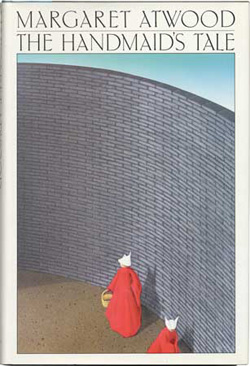
The Handmaid’s Tale is a disturbing, intriguing novel. It’s very much a novel of excellent prose and slight shifts rather than big explosions, and you need to be digging into every word as you read, but the experience is well worth it. My only qualm is the needlessly ambiguous ending, especially since any actual doubts are resolved in the epilogue.


The first Black Company novel in the omnibus was interesting due to the writing’s simplicity and the world’s refreshing amorality, but I wasn’t totally sold on the series. I can’t say that I’m a total convert yet, but Shadows Linger went a long way toward winning me over. My main gripe with the first volume, the highly episodic nature of the plotting, is absent here, and the character of Shed gives the story some variety. I have no idea how Cook’s going to bring this to a close in just two hundred or so pages, but I guess I’ll find out when I read White Rose next month. Look for a review then.


I’ve heard again and again that Malazan gets worse as it goes along, and I know two or three people who dropped the series at Reaper’s Gale, and yet it’s having the opposite effect on me. I didn’t fall in love until House of Chains, and each successive volume seems to just drag me deeper. This volume wasn’t perfect, of course (none of the Malazan books are even close to that), but like with all the other volumes, there are enough jaw dropping positives to overpower the occasional cringe worthy negative. I’m going to try and wrap up the Malazan series in a grand series of reviews once I get caught up.


Mad Ship is even better than Ship of Magic, and Ship of Magic in turn was even better than Farseer. At this rate, Liveships is going to quite possibly become my favorite trilogy. The characterization is just as good here, the world is broad and interesting, and the plot will occasionally surprise the hell out of you…though it probably wouldn’t have helped if the back cover didn’t reveal the first few hundred pages of the book quite so glibly. Look for my review once I finish the trilogy.


I’ve said it before (to myself, if that counts) that Stephen King is the best modern horror author there is (though I haven’t read nearly enough to properly make that statement), and that The Shining is his best novel (there I think I can qualify, having read over twenty of ‘em). I’ve been truly terrified by three stories – and I mean terrified, not kinda uncomfortable or whatever the hell most horror movies are shooting at – and the Shining has one of those three scenes. The horror, however, is far from the main part. Jack’s struggle with himself is torturous to watch, yet some of the best writing I’ve ever read. The ending is awful, but compared to some of King’s others it’s only kinda-awful, so I guess we’re lucky there. If you haven’t read the Shining yet, you’re missing out.


I have no idea why I picked Stephen King’s latest short story collection, when his earliest was stocked right next to it, no less, but I did, and I really wish I hadn’t. Everything’s Eventual is the first time that I’ve been truly disappointed by King, but damn did it hurt. My complete review is here.


The City and the City is a bit of an outlier for Mieville, but it succeeds at what it set out to do with ease. The book’s cornerstone, the two overlapping cities and their mutual ignoring campaign, is thought provoking and well handled, and the cinematic prose style (as in a lack of interior thoughts, not a lot of explosions) conveyed the atmosphere quite well. Unfortunately, both of those are interesting techniques that don’t make for easy reads. In addition, the ending, while technically filling all of the holes, was more than a bit disappointing. Though I don't necessarily agree with his conclusions, James has a good review of this up that should let you get a decent idea of the contents.


You know when you’ve built your expectations about something to the point where you know it’s going to disappoint you? And then it surpasses even those? Yeah, that’s what happened with Terminal World. It’s not a perfect novel, but it’s impossible to predict and written with a ridiculous amount of panache. If I were to compare it to something, I’d say that it’d be an odd mixture of Century Rain, Mieville’s bibliography. If you like Reynolds, you need to read this. If I succeed in composing my thoughts, I’ll write a review of this in a week or two. Until then, I'll contrast the Wert review I posted earlier with the Walker of Worlds one that I just read. Though some of the things he disliked were precisely why I loved the book, the review's quite informative and should give you a good idea of what you're getting into. UPDATE, I've now reviewed this here.


Old Man’s War was a fun, easy ride that had some intriguing ideas under its hood. The whole experience was slightly marred, however, by occasional clichés (which aren’t helped by Scalzi’s pointing them out) and a few scenes that are just too over the top to be effective. If you’ve read the book, you know what I mean. Hint: it involves Lilliputians. Still, I’ll be reading more of Scalzi’s work without a doubt. If you want a more comprehensive look at the novel, check out Aidan’s review. For a glimpse of some more of the novel's faults, go here.


This was absolutely delightful. The play is laugh out loud funny at several points, and the underlying ideas are brilliant. I only have two regrets: 1. That I couldn’t see it performed, and 2. That I didn’t get a chance to write down some of the passages before having to return my copy.


Not every story in this collection works, but every story tries something new and imaginative. There are three main story cycles here, as well as a few miscellaneous pieces, and all three are quite varied. The collection contains little in the way of new Ambergris material, though that’s not to say none, but the Incan stories are completely new and quite intriguing. Though I’d already read the majority of the Veniss stories in Veniss Underground, I was far more impressed the second time around, and I think my older treatment of them was more than a tad superficial. VanderMeer has yet to disappoint me, and he certainly didn’t do it here.

Thursday, January 28, 2010

Robin Hobb - Farseer

All too often I find I have wandered far from a history of the duchies into a history of FitzChivalry. Those recollections leave me face-to-face with who I once was, and who I have become.

Robin Hobb is, in many ways, a one trick pony. Wait, wait! Don’t leave yet. I don’t mean that in a particularly negative way. There’s nothing wrong with the majority of her style; it’s just utterly overshadowed by one aspect. She has less in common with a dog standing on its high legs and more in common with a dog learning to drive a racecar.

As anyone who’s ever read Hobb can likely attest, her strength is not plot. Farseer’s plot is, ultimately, fairly generic. There is an abandoned bastard son, brought to the castle to serve as an assassin. There are three brothers, two honorable and brave, one spiteful and cowardly. There are barbarian raiders from another land, and there are magics both old and very old. Have I intrigued you yet? No, I thought not.

Her strength is not setting. We’re in the Six Duchies, a confederation of six former states, all ruled under one king. The coastal Duchies fish; the inner Duchies farm. There is conflict between the two; the coastal Duchies are reluctant to pay taxes to defend a coastline they do not share. It’s thought out better than most of its ilk, I’ll admit, but it’s still not exactly the kind of thing that you view with your jaw on the floor.

Robin Hobb’s strength is character. It’s not an intellectual strength; I’m not talking about revolutionary backstories, or motivations, or anything like that. Her strength is visceral. These people feel real in every way possible. We see Verity trying to fill his older brother’s shoes, trying to guard the kingdom. He does everything he can, and he is wasting away, and it is not enough. We see him, and we know that he cannot succeed, and he knows he cannot succeed, and yet he cannot – will not – stop.

Fitz is the main character, the aforementioned bastard son of Price Chivalry. He has a depth that can only be had when the reader experiences his growth alongside the author, alongside the character. When we first meet Fitz, he is a blank slate:

My memories reach back to when I was six year old. Before that, there is nothing, only a blank gulf no exercise of my mind has ever been able to pierce. Prior to that day at Moonseye, there is nothing. But on that day they suddenly begin, with a brightness and detail that overwhelms me...

It’s said that our experiences shape us, and so it is here. We experience everything that Fitz does, and so is it that surprising that we are shaped in the same way the he is? In book one, we see Fitz develop loyalties in friendships. In book three, these loyalties are tested. The reader cannot look on with detachment, cannot wonder if he will stand fast or not. There is no intellectual contemplation, no thoughts that he should simply bite the bullet and move on. By that point, it is not Fitz that is being tested, at least not wholly. The reader is invested along with him. Every bond that Fitz forges is shown with meticulous detail, and the reader himself becomes friends with Prince Verity, Molly, and Burrich. These friends may not speak to us directly as we read, but there interactions with Fitz are, on every level that matters, interactions with us.

We become so deeply immersed with Fitz that his reasoning becomes our own. I would wager that everyone has had the unsettling experience of having someone tell us our own motivations and realizing that what we thought we were acting for was just blissful, comforting delusion. It is the same experience when Fitz’s motivations are called into question. Acts that felt so pure at the time are suddenly given new light, and we feel almost sullied as we contemplate them afresh.

A large portion of your enjoyment of Farseer depends on how much you like to meander. Hobb is anything but direct. I’ve heard it said that her writing is eighty percent filler, and it’s hard to really dispute that claim. All the same, I think that it’s the so called filler that makes Hobb worth reading in the first place. The reader lives through Fitz’s life, and I do not mean just the important moments. No, the books – and Hobb – shine through the monotony of day to day existence. If you are willing to simply cut yourself loose, to lose yourself in Fitz’s existence, you’ll find yourself living a life no less complete and complex as your own.

I suppose that that is, quite literally, escapism. All the same, I’ve never understood the term completely. It’s defined as: “Habitual diversion of the mind to purely imaginative activity or entertainment as an escape from reality or routine.” I suppose I can’t argue with that, but the term seems to far more often carry a negative connotation. I’ve often heard it said that it’s taking refuge from the real world. Ignoring the tone of the novel in question, something has never struck me as accurate about this definition. Just because what we’re doing does not directly tie into our own lives, why is it inherently meaningless? I’m not defining meaning as a simple recharging of the batteries here, either, though it can do that too. But books can do so much more. Who says that, just because the terms in question are not those of the real world, we are not learning, are not experiencing?

Besides which, if I was going to escape to somewhere else – a Hawaiian vacation for the soul, say – I’d make it somewhere les depressing. The titles and covers all seem quite carefree, but the actual text is anything but. This is, despite all appearances to the contrary, anything but standard fantasy. We are in Fitz’s head for his triumphs, yes, but also for his tragedies, and we feel both with equal force. Just because Fitz tries something, and just because Fitz is one of the “good guys,” does not mean that he will succeed. Be prepared for disappointment of the most bitter flavors while reading.

“I always believed, perhaps childishly, that if you followed the rulers, you would be protected, that things like that would not happen to you. Afterward, I felt…tricked. Foolish. Gullible, that I had thought ideals could protect me. Honor and courtesy and justice…they are not real, Fitz. We all pretend to them, and hold them up like shields. Against those who have discarded them, they are no shields at all, but only additional weapons to use against their victims.”

Of the individual books, the first is at once the one with the fewest flaws and the weakest. The second, by contrast, has glaring problems, and yet it’s undoubtedly my favorite. The first book lays down the connections, and it is half the size of the others. It’s not focused, no, but it never meanders too much, and we always have our ending goal in sight.

The second, on the other hand, is almost nothing but meander. It’s an attempt to preserve the status quo as seen in book one, but for half the text exactly how we’re doing so is quite hard to see. That being said, Hobb’s writing gets better as it goes on, and every interaction between Fitz and another character only makes the overall story that much deeper.

The third novel is an odd mixture of the two. It should, by all rights, be the most driven. A goal is immediately established, and Fitz sets out to accomplish it. Perhaps because of this, it’s the first time where the repetitive nature of the story began to become somewhat irksome. When there’s no set destination, I’m fine with exploring every little town that I pass on a long drive. When I’m late for something, however, I’m far more tempted to ram the pedal to the ground and get somewhere. This is not an urge that Hobb shares, and the cycle of Capture-Escape goes on to the point of insanity. At which point we’re finally given a break, and the book takes a hard right turn. Everything changes, and it’s at once totally brilliant and anything but. The ending is powerful, yes, but also rushed. As it is, it’s a decent closing to a brilliant series, but it’s impossible to shake the feeling that it could’ve been an amazing ending.

If you’re looking for something exciting, or something uplifting, Farseer is not for you. This isn’t about a gripping plot or fascinating locales. This is about people living their lives, and, though it’s fantasy through and through, Fitz and Hobb’s other creations feel as real to me as anyone I know. If character driven is what you’re after, I’m not sure it’s possible to do better than this.